

Sometimes Silence Is the Support
- Andrew J Calvert

- Jun 11
- 2 min read
I recently attended a half-day professional development program , designed for educators who bring coaching into their educational practice. One of the sessions I attended was called The Courage to Pause: How Silence Strengthens Presence and Connection.
What fascinated me was how simple the structure was.
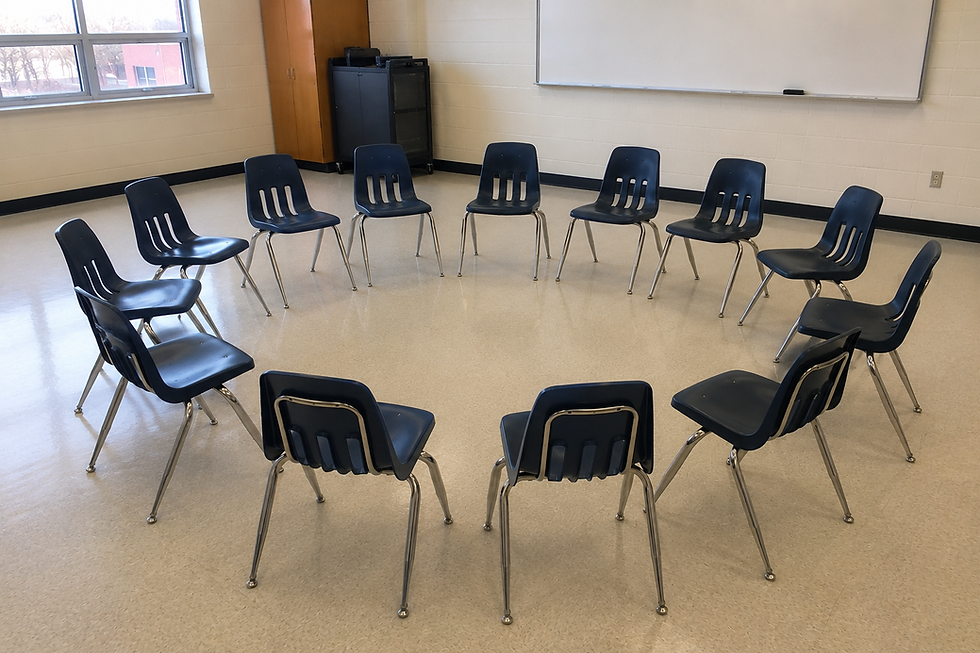
Fifteen of us sat together in a circle. Whoever wanted to speak held the talking stone. Everyone else listened. No interruptions. No questions. No talking over one another. No adding your own story. We were required to give space for someone to speak and be heard.
As we moved around the circle, I was struck by how much people were carrying.
There was grief over the death of loved ones. The strain of difficult relationships. The tension of balancing a full-time job with being a full-time parent. The exhaustion of trying to make sense of the complexity of the modern world while still showing up every day for students, colleagues, and families.
And beyond what people said, I noticed how the collective silence changed the quality of the room. Nobody rushing in to fix or reassure. Nobody sharing advice, or even an empathetic touch. There was simply attention.
After everyone had spoken once, we were invited into a second round of conversation. This time people reflected on what had resonated with them, what they had noticed, and what echoes of themselves they had heard in the stories of others. Not everybody spoke the second time around, but there was a visible sense of recognition across the group.
One person spoke about feeling the need to wear a mask even when something painful was happening in their life. Another described the emotional challenge of being questioned and challenged by students while still trying to remain calm and present.
It reminded me that sometimes even well-intentioned listener behaviours can become distractions. Nodding, encouraging sounds, jumping in to empathise, or trying to show support can unintentionally pull a speaker away from their own thoughts.
In this setting, the silence itself became supportive.


Comments